
Town pages for details
If you're closer to one of those towns, that town has its own page with details specific to its housing and streets; this page covers the panel job itself across the whole area.
Jupiter, FL
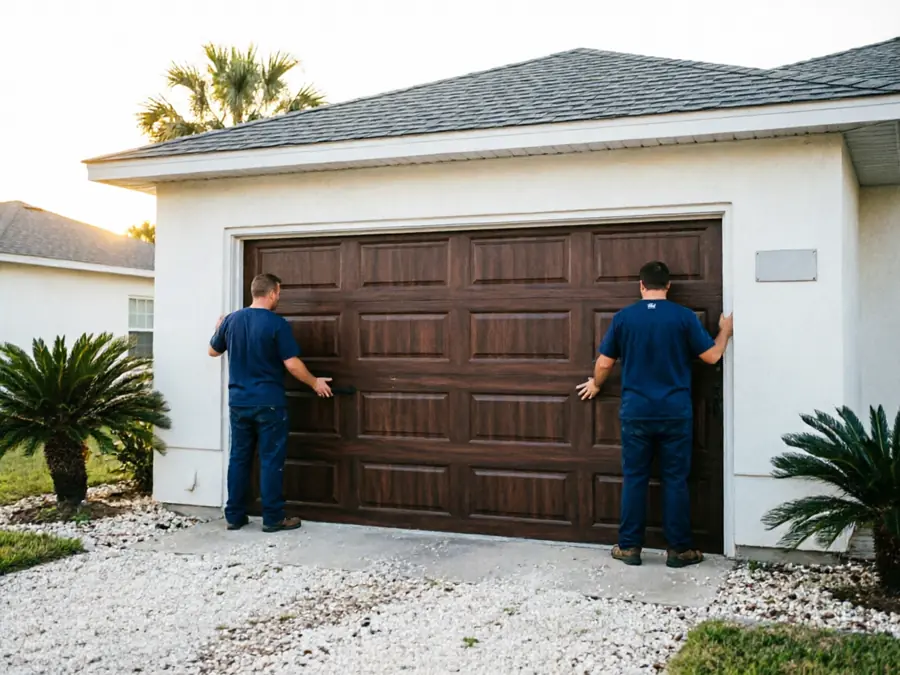
Dented or faded garage door panels on a Jupiter home from the 1980s or 90s? Here's why panel replacement differs here and what the repair actually takes.
Local causes
Most of the housing across this service area went up between 1965 and 2021, with the bulk of it landing in the 1980s and 90s across the 16 named areas we cover. That matters for panels specifically. A door built in that window is steel or aluminum sandwich construction, and after three or four decades the finish on the sun-facing side has usually gone chalky or faded a shade or two off the rest of the door, even if the hardware underneath still runs fine.
The climate here is mild temperate, which is a mixed blessing for panels. You don't get the freeze-thaw cracking that splits sections in colder states, but you do get steady heat and sun exposure year-round, and that's what warps thin aluminum panels and bakes the color out of steel ones unevenly depending on which way the door faces. A door on the south or west side of a garage fades faster than its own matching panel on the other half of the same section.
So the common call isn't storm damage or a single dent from a bumper. It's a panel that's warped enough to bind on the track, or faded enough that it's obviously a different shade than the rest of the door, on a door that's old enough that the manufacturer doesn't make that exact panel anymore.
The repair
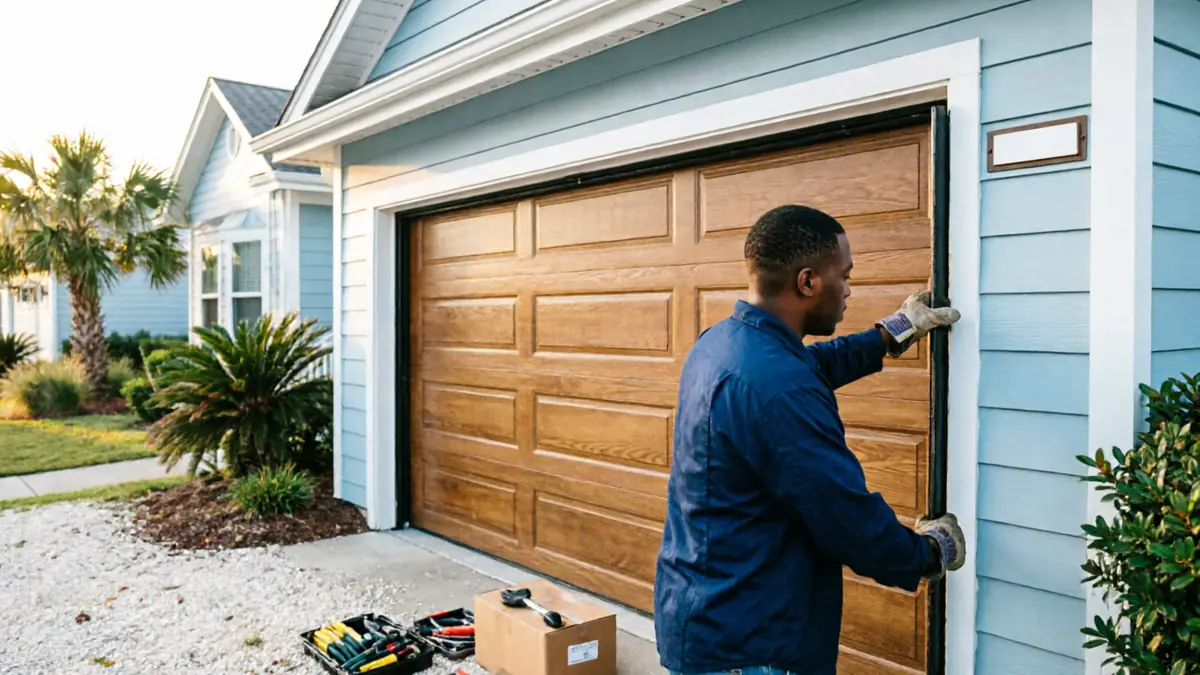
Panel replacement starts with figuring out if we can match what's there. On a door from the 1980s or 90s, that's often the hard part, not the install.
Manufacturers change panel sizing, embossing patterns, and hardware spacing over the years, so a section pulled off a 1986 door doesn't always bolt onto a 1994 frame even if they look alike from the driveway.
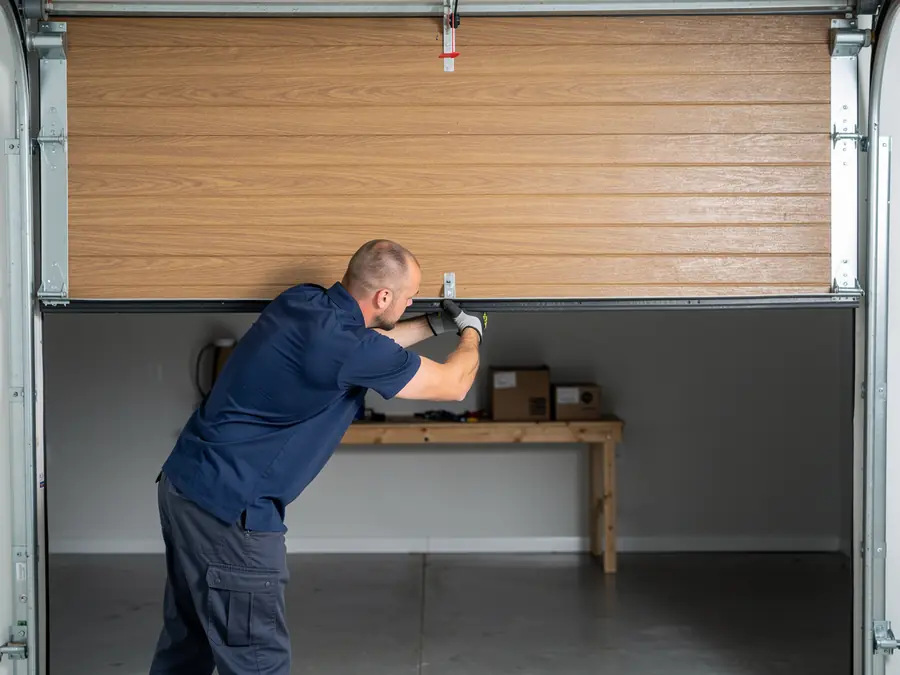
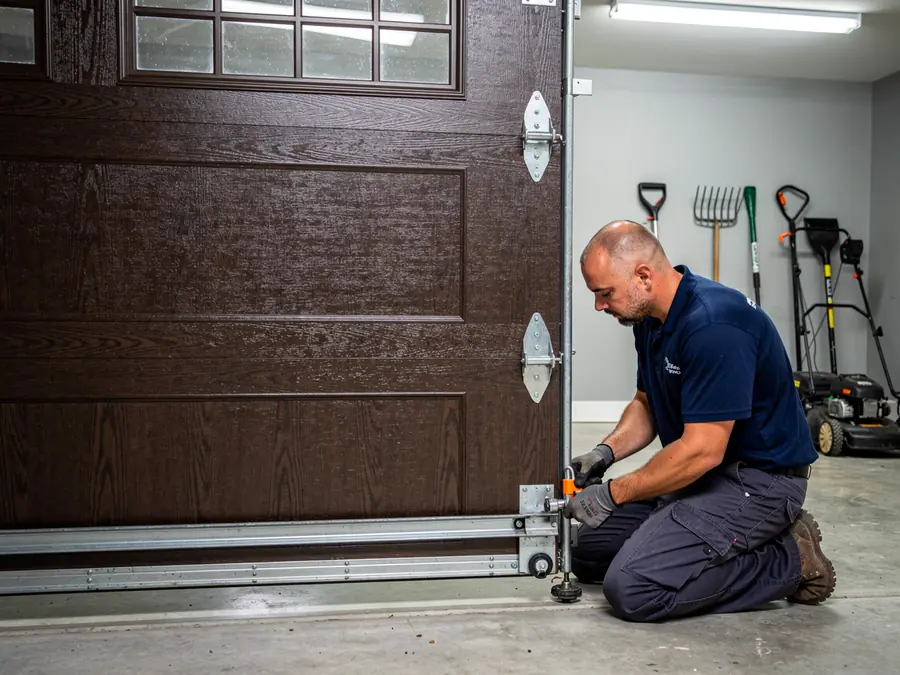
When a matching panel exists, the job is straightforward: unbolt the damaged section, transfer the hinges and rollers, bolt in the new one, and check the door balances right afterward since even a few pounds of weight difference between an old faded panel and a new one can throw off the spring tension. Here's the honest part. When a match isn't available, which happens more often the older the door gets, we tell you straight that panel replacement isn't worth chasing.
At that point you're either living with a visible mismatch or replacing the whole door, and for a lot of owners with original doors from that 80s-90s stretch, full replacement ends up being the more sensible call once you add up the sourcing time and the risk of a second panel aging differently right next to the first.
Booking
We work across the Jupiter service area, which runs from Tequesta three miles north down through places like Juno Beach, North Palm Beach, and the areas further out toward Riviera Beach and Royal Palm Beach.
If you're closer to one of those towns, that town has its own page with details specific to its housing and streets; this page covers the panel job itself across the whole area.
When you call, the first thing we ask is the door's age or the brand name on the end cap if you can see it, because that tells us whether we're hunting for a matching panel or whether we should talk about a full door instead. Bring a photo of the fade line or the dent if you can - it saves a trip when the answer is obviously one or the other.
With a median household income of $86,562 across the service area, we see a real mix of owners who want the door matched exactly and owners who'd rather just get a new section on fast and move on. Both are fine. We just need to know which one before the truck rolls.
Warning signs
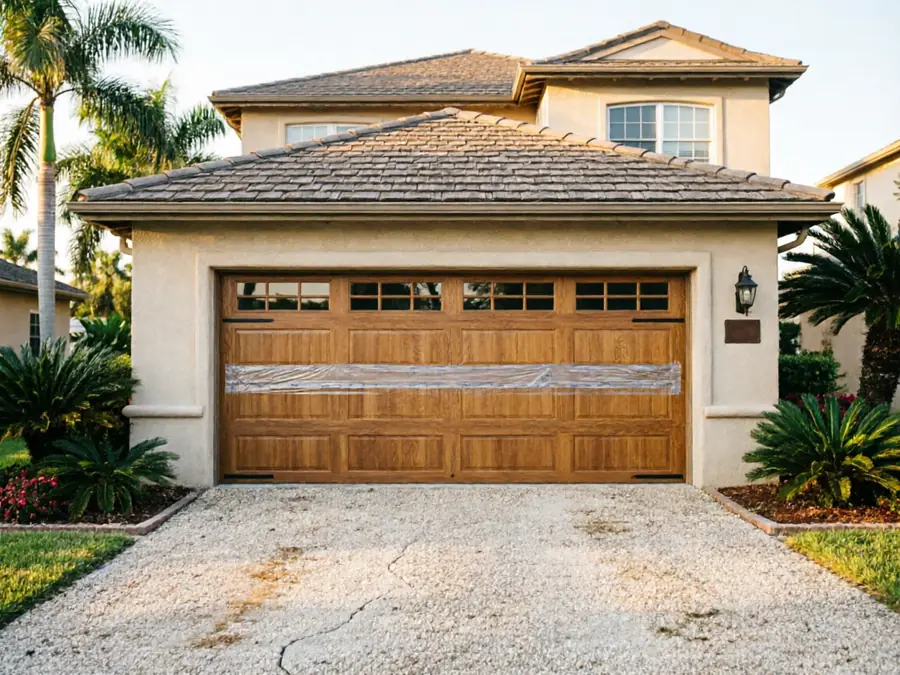
The panel job usually starts with one of three complaints. First is a visible color mismatch - one section noticeably lighter or more chalky than the rest, almost always on the side of the door that gets the most direct sun through the day.
Second is a section that's bowed or warped enough that you can see daylight around its edges when the door's closed, or it catches on the track on the way down. Third is a straightforward dent, usually from a car bumper or a dropped ladder, where the panel itself is fine structurally but the crease is deep enough that it's starting to bind against the roller track or the panel above it.
If you're only seeing a scuff or a shallow dent that doesn't affect how the door runs, that's often cosmetic and not worth a repair call on its own - worth mentioning since we'd rather tell you to leave it than send someone out for nothing.
If the door is dragging, grinding, or won't seat flush at the bottom, that's when it's worth getting looked at before the track or rollers take on extra wear from the bad panel.
Questions
Sometimes, but not always. Steel and aluminum panels fade and chalk at different rates depending on which way the garage faces, and manufacturers change their finishes over the decades. On a door from the 1980s or 90s we'll check what's available before promising an exact match - if it's close but not perfect, we'll tell you that up front.
It's almost always sun exposure. In this mild temperate climate, a panel facing south or west takes steady heat and UV for years longer than a shaded panel on the same door, so one section chalks out or discolors while the rest holds its original finish.
Depends on the door's age. If we can source a matching section, one panel is usually the smaller job. If the door is old enough that the original panel line is discontinued, which is common on 1980s and 90s stock, a full door often ends up making more sense than chasing a mismatched replacement.
It can, especially if the new panel is a different weight than the faded original. We check spring tension and balance after any panel swap, since an unbalanced door puts extra strain on the opener and the other panels over time.
Explore more
Ready when you are
Jupiter Garage Door Co repairs and installs garage doors, springs and openers in Jupiter, FL and the surrounding area.